Savon de Marseille: The Twelve-Hour Soap
Why the green olive-oil soap of Provence has been protected by royal edict since 1688 — and why almost everything sold under its name today is a fake.
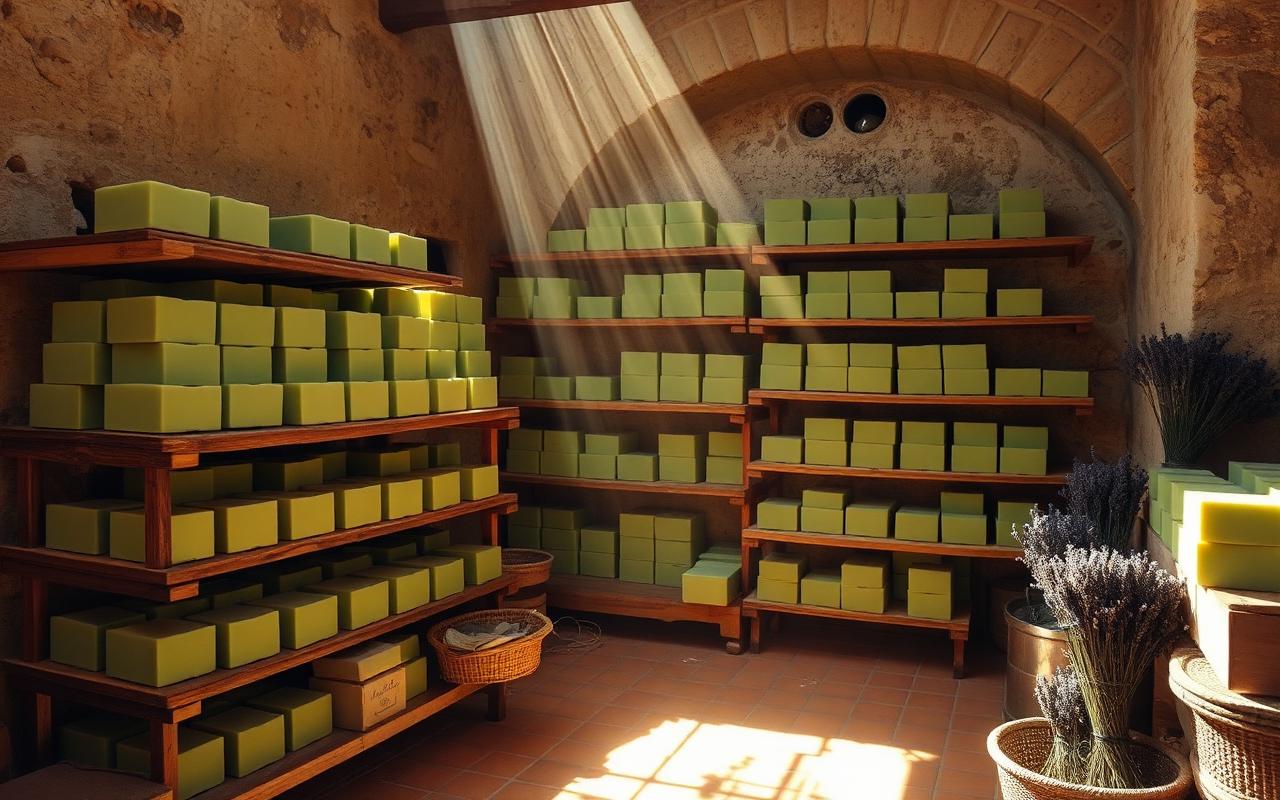
The edict of 1688 is unambiguous. To call a bar "Savon de Marseille" — savon de Marseille véritable — the soap must contain at least seventy-two percent vegetable oil, no animal fat, no synthetic fragrance, no colourant, and it must be cooked for ten to twelve days in a cauldron in or around the city of Marseille. Louis XIV's minister Colbert wrote the rules. They have been ignored, more or less continuously, ever since.
There are, today, four soap factories in the world that still make true Savon de Marseille by the Marseille Process. We visited the one in Salon-de-Provence, half an hour north of the city, where the master savonnier still goes by the title maître savonnier and still wears, for reasons of tradition rather than fashion, a starched white apron over a navy-blue cotton smock.
The process unfolds in five stages, each named in the old Provençal: l'empâtage (the pasting), le relargage (the salting), la cuisson (the cooking), le lavage (the washing), and la liquidation (the finishing). It takes between ten and twelve days from cauldron to slab. A modern industrial bar, by contrast, can be extruded in under three hours.
What you get, at the end, is a cube of soap roughly the size and shape of a small brick. It is olive green, faintly translucent at the edges, and stamped on six sides with the maker's name and the magic figure: 72% d'huile. It dissolves slowly. It produces a clean, low lather. It costs about a euro a hundred grams at the factory door, and the same bar in a department store in Tokyo will cost you fifteen.
We use Savon de Marseille as a benchmark, the way a chef uses a good baguette: not the flashiest thing in the kitchen, but the standard against which everything else is measured. The bars we ship are not Marseille soaps — none of them come from Salon — but the seventy-two percent rule is one we keep. Every bar we carry is at least seventy-two percent vegetable oil, by weight, no exceptions.
If you are going to buy a single bar of European olive oil soap in your lifetime, buy a real one. Look for the cube shape, the six-sided stamp, the words "extra pur" or "72%", and one of the four protected mill names: Marius Fabre, Le Sérail, Fer à Cheval, or La Savonnerie du Midi. Anything else is, with apologies to the gift shops of Provence, just a green-coloured bar of disappointment.
— Filed from Salon-de-Provence, France