The Argan Cooperatives of the High Atlas
On a women-run argan oil cooperative outside Essaouira, and the ingredient that quietly outperforms every premium moisturiser we have ever tested.
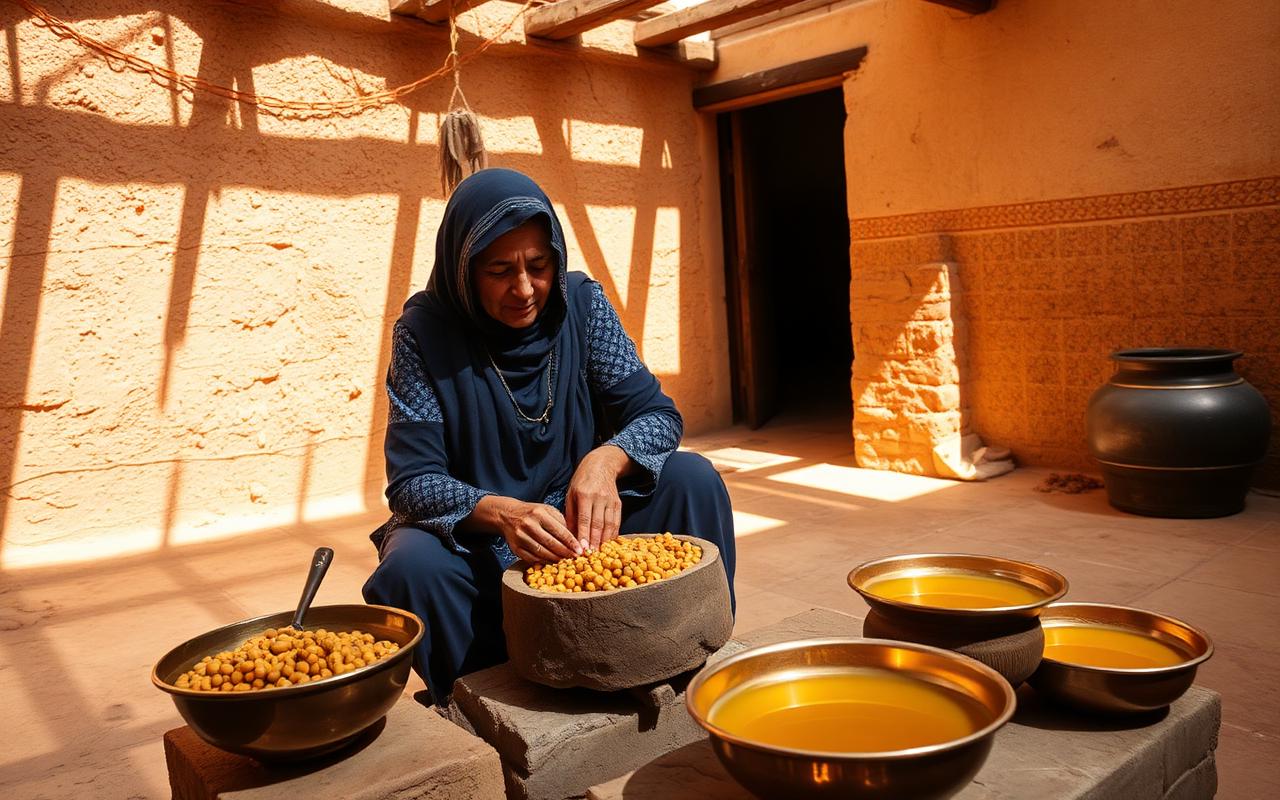
The argan tree grows in exactly one place on earth: a strip of southwestern Morocco perhaps two hundred kilometres long, between the foothills of the High Atlas and the Atlantic coast. The trees are slow, gnarled, and astonishingly resilient. Goats climb them. The kernels of the fruit, after the goats are politely shooed away, contain one of the rarest and most prized cosmetic oils in the world.
We spent four days at a women-run cooperative outside Essaouira, where about sixty Berber women press argan oil by hand using stone mills that look, and operate, exactly the way they did in the eleventh century. A skilled presser can produce perhaps a litre of cosmetic-grade argan oil in a long day's work. A litre is worth, at the wholesale level, more than the women earn in two weeks. So the cooperative's existence — owned, run, and profit-shared by the pressers themselves — matters in a way that goes well beyond ingredient sourcing.
The oil is the colour of pale honey and has a faint, nutty smell that disappears entirely once it is folded into a soap base. What it brings instead is a fatty acid profile that is, for skin, almost too good to be true: eighty percent unsaturated fats, very high in oleic and linoleic acid, plus tocopherols (vitamin E) at a concentration roughly twice that of olive oil. It is, in plain English, the best moisturiser in the plant kingdom.
We have not yet found a maker whose argan bar meets our standard — the oil is too precious, and conversations with the cooperative are still unfolding in the deliberate, tea-glass-by-tea-glass rhythm of Moroccan business. But we expect, by the spring of 2027, to be carrying a small-batch Atlas bar at perhaps four hundred units per run.
Until then, a piece of practical advice: if you buy argan oil for your skin, buy it from a cooperative that names the women who pressed it, in dark glass, and never from a plastic bottle on a supermarket shelf. The supermarket version is almost always cut with sunflower oil and oxidised by the time you open it. The real thing smells faintly of warm walnuts and changes the texture of your skin within about a week.
— Filed from High Atlas, Morocco