Kelp, Cold Water, and the Quiet Genius of the Westfjords
How a fourth-generation seaweed harvester on Iceland's lonely north coast makes the most mineral-dense bath bar we have ever tested.
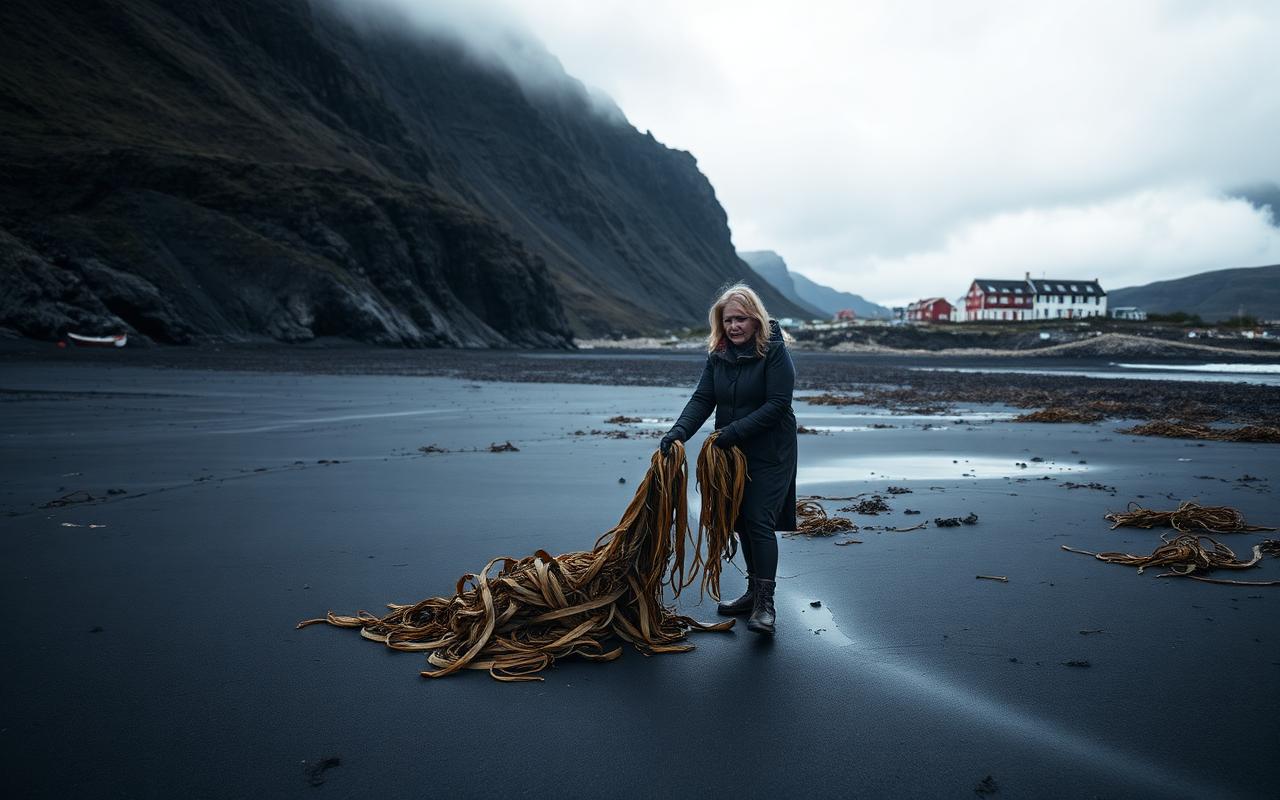
Sigrún harvests kelp the way her great-grandmother harvested kelp: at low tide, in oilskin trousers, with a short curved knife and a willow basket. The basket is older than she is. Her great-grandmother started the family seaweed business in 1907, the year the herring boom came to the Westfjords and the year, by no coincidence, the first proper soap maker arrived from Copenhagen.
The North Atlantic is, biochemically speaking, an absurd place. The kelp that grows along the basalt cliffs of the Westfjords spends its entire life in water that hovers just above freezing, lashed by storms, scoured by the saltiest, most oxygenated current in the northern hemisphere. To survive, it produces an extraordinary concentration of fucoidan, alginates, iodine, magnesium, and a long list of trace minerals that read like the periodic table's greatest hits.
We are interested in the kelp because it is, hands down, the most powerful mineral additive we have ever tested in a cold-process soap. Two percent dried Icelandic kelp by weight, milled to a fine powder, turns a plain olive oil bar into something that genuinely changes how your skin feels in the shower. The lather goes from cream to silk. The bar itself takes on a faint marine green that no synthetic colour has ever quite matched.
The Norse Viking bar we brought back pairs Sigrún's kelp with three other ingredients sourced inside a hundred-mile radius of her cottage: birch tar from a small distillery in Patreksfjörður (smoky, almost medicinal, beloved of every Icelandic grandfather we met), North Atlantic sea salt evaporated in shallow pans on the south coast, and a fine grey volcanic clay from the foothills of Snæfellsjökull.
The soap is cold-pressed, which means the saponifying mixture never goes above thirty-eight degrees Celsius. Cold process is slower and fussier than the hot process used in Aleppo, but it preserves the heat-sensitive compounds in the kelp and the volatile aromatics in the birch tar. The trade-off is the cure: each bar must rest on a slatted ash-wood rack for at least forty-two days before it leaves the maker's workshop.
Sigrún does not use her own soap. She washes with a yellow bar of laundry soap from the village shop, the way her father did. "The kelp is for tourists," she said, with the particular Icelandic deadpan that takes a foreigner about three days to recognise as warmth. Then she handed us a thermos of coffee and walked us back along the tideline, pointing out the species of kelp she will not harvest because they are not, in her grandmother's word, ready.
We came home with a crate of Sigrún's bars, the maker's recipe scribbled on the back of a fish-shop receipt, and the unshakeable conviction that the most modern thing you can do for your skin in 2026 is to wash with something a Viking would recognise.
— Filed from Westfjords, Iceland