
I.
Loke's Trickster Soap
A refreshing, minty crowberry bar from the shapeshifter himself.
In the dark age, when most of Europe drowned its odors in perfume and bathed once a year, the men of the north washed every Saturday and combed their hair every morning. Their word for that day — laugardagr — literally meant wash day.
A thousand years later, on a windswept island in Vesterålen, a self-described volve still makes soap from the same berries and herbs the old sagas named — and stamps each bar with a god.
The Vikings had a reputation for being filthy raiders. They were actually the best-groomed people on the continent.
Combs, ear-spoons, tweezers and razors appear in nearly every Viking grave. Daily washing, weekly bathing, and a fresh change of clothes were standard practice from Iceland to the Black Sea — at a time when English nobility considered any bath at all a medical event.
The 12th-century English chronicler John of Wallingford complained about Danes settled in his country with a kind of strangled admiration — they were, he wrote, undermining the virtue of married women and seducing the daughters of nobles.
In Norse society, a völva (or volve) was a woman who held an authority the gods themselves came to consult: a seeress, a sorceress, a keeper of medicinal knowledge. Even Odin rode to a völva's grave to ask after the fate of his son.
Norse Viking Soap is made by one. Not a brand persona — an actual woman in Vesterålen, working from old recipes, foraging berries off the same hillsides her grandparents did, boiling, pouring, stamping, curing.
Every bar is named for the god whose myth its main ingredient carries. Loke gets the trickster's crowberry. Tyr gets the blood-red lingonberry. The juniper, of course, belongs to Thor.
 Plate I · The volve · Vesterålen coast at twilight
laugardagr — Saturday. Literally, wash day. Still used in Icelandic, Faroese and Norwegian Nynorsk today.
Above the Arctic Circle, the plants that make it through the dark have to be ferocious. The Vikings learned to read them as both food and medicine.
Cloudberries carry 3–4 times the vitamin C of an orange and so much benzoic acid they preserve themselves; Norwegian sailors carried barrels of them against scurvy long before anyone in London knew why limes worked. Lingonberries, packed with salicylic acid, were brewed into wine and kept by the bedside as a daily tonic — a 3,000-year-old lingonberry wine was pulled from a Viking grave in Denmark.
Crowberries fed the men of the Faroes through winters when nothing else grew. Juniper twigs, boiled into a dark decoction, were the universal antiseptic of Norway right up to 1963.
The same berries the sagas mention are the ones now in these bars.
These islands sit above the 68th parallel, where the sun never rises in December and never sets in June. The growing season is short, fierce, and almost entirely wild. Every berry in these bars is foraged within walking distance of where the soap is made.
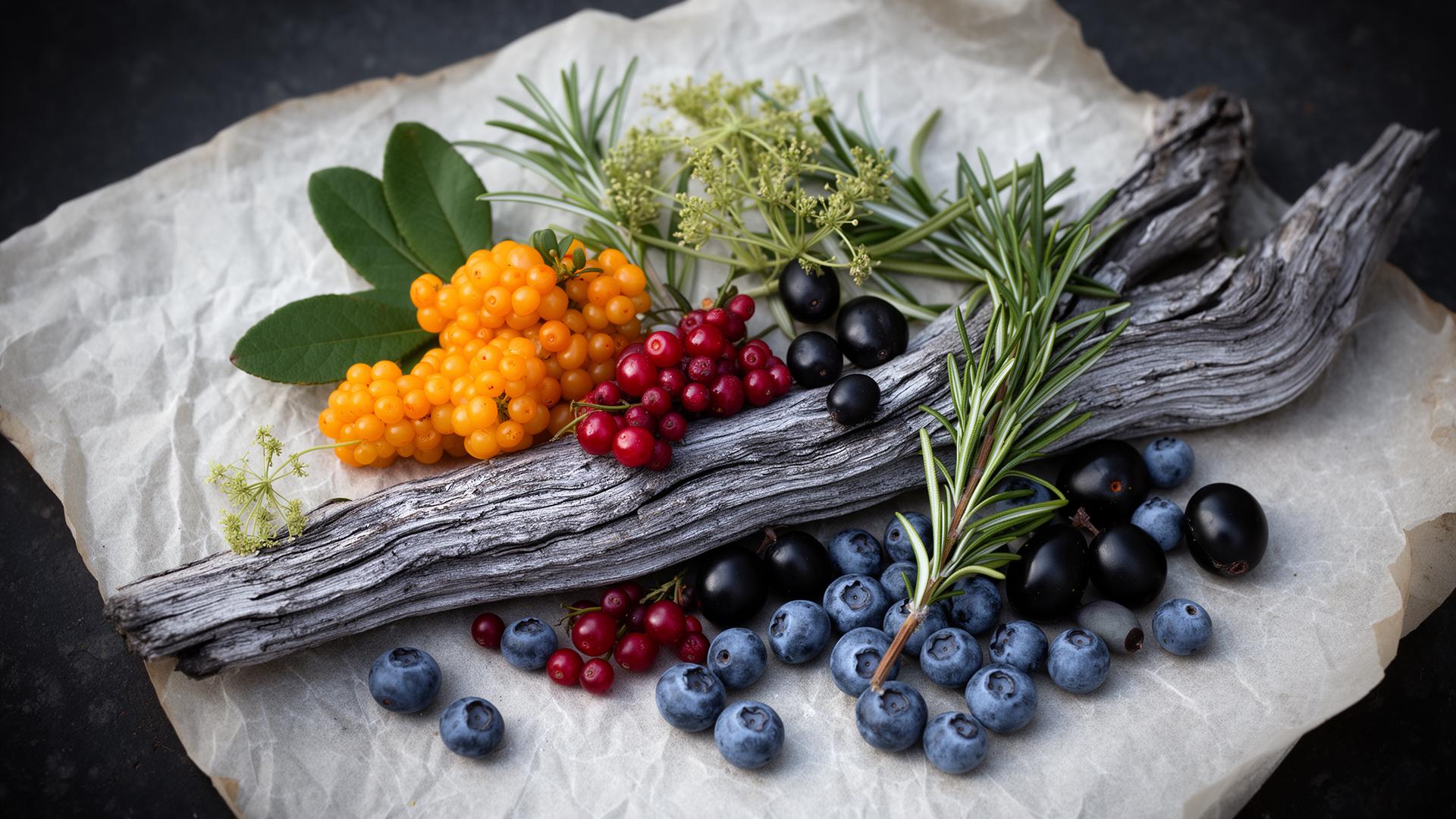 Plate II · The forage · driftwood, parchment, six wild plants
Six handmade Norwegian soaps, each carrying the myth of its main ingredient. Click any bar to read the saga — or
A refreshing, minty crowberry bar from the shapeshifter himself.

Blood-red lingonberry bar named for the one-handed god of war.

Mild blueberry-and-peppermint bar for the fair, doomed son of Odin.

The 'gold of the plateau' — cloudberry, bergamot and lemon.

Garden angelica with scots pine and rosemary — the medicine goddess's bar.

Boiled juniper-twig decoction — Norway's old universal cure, in bar form.
Relic exists for objects like these. Soap that knows where it came from. A maker who refuses to let the recipe vanish. A reason older than marketing.
Norse Viking Soap is made and sold in Norway in kroner. Relic is the U.S. retailer bringing them stateside this summer — drop your email and we’ll write the moment the first crate clears customs.
For the makers who still remember. For the places that still leave a mark.