The Milk Run: Goat Milk Soap from Dundas, Ontario
An afternoon at a small farm near the Niagara Escarpment, where goat milk soap is made the hard way — and why we are still just talking, not buying, not yet.
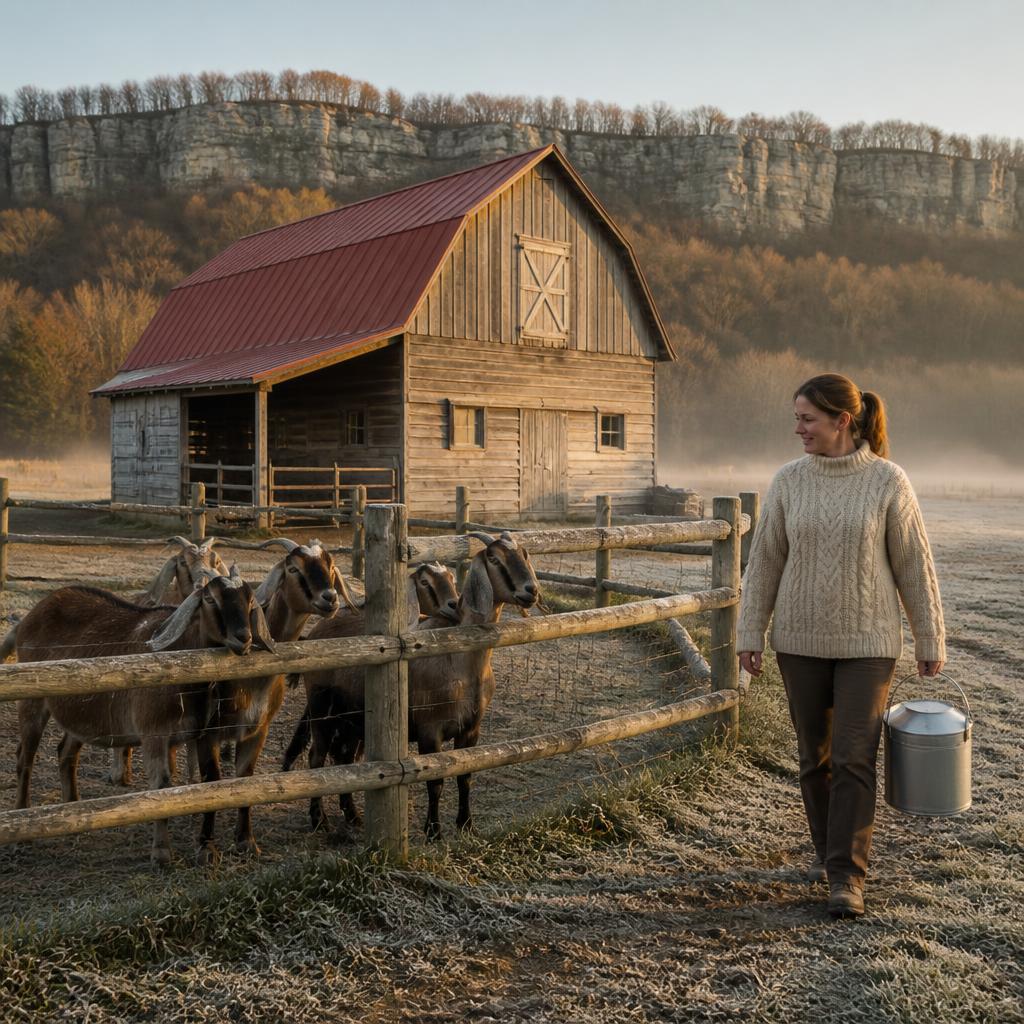
The road into Dundas comes off the escarpment and drops into a valley that still feels like farmland, even though Hamilton is only a few minutes away. It was the first week of November. There was frost on the grass at seven in the morning and gone by nine, and a small herd of Nubian does was making the sort of racket that means somebody is late with the grain.
We had come for goat milk soap, which we had been dismissing quietly for years. It sits on every farmers' market table in North America between the lip balm and the beeswax candles, and most of what is sold under the name is a melt-and-pour glycerin base with a splash of powdered milk stirred in at the end. That is not a scandal, exactly. It is just not what the label implies. We wanted to know what the real article does in a pot, made by people whose milk comes from animals standing forty feet away.
The farm is run by a mother and her son, second and third generation on the same land. They asked us not to use their names yet, because nothing is signed and they have been burned by people who turned a visit into a press release. They milk twice a day, sell most of the milk as cheese to restaurants in Toronto, and turn the surplus into soap in a small workshop behind the barn. She has been making it since the late nineties. He did a food science degree in Guelph and has spent the last four years arguing with her about temperature and losing.
Here is the thing nobody tells you about goat milk: it is not water, and soapmaking chemistry assumes water. Lye needs a liquid to dissolve in, and dissolving lye is violently exothermic — it will drive a solution to eighty degrees Celsius on its own. Do that to milk and you scorch the sugars. Lactose caramelises, the batch turns the colour of peanut butter, and the whole workshop smells like something died. Her fix is the one every serious goat milk soapmaker eventually arrives at: freeze the milk into a slush first, then add the lye in small increments to a bowl sitting in an ice bath, stirring the entire time, over about twenty-five minutes. The mixture stays under fifteen degrees. It comes out the colour of buttermilk instead of caramel.
He wanted to run it warmer and faster. He had spreadsheets. She let him make a batch his way in the spring of 2023 and then made him keep the bar on a shelf by the door for a year as an exhibit, which is a very Ontario way to win an argument. It is still there. It is brown.
What the milk actually contributes is a fair question and one where the marketing has run far ahead of the evidence. The honest version: goat milk is roughly 87 percent water, with about 4 percent fat, 4 percent lactose and 3 percent protein. The fat adds unsaponified content to the finished bar, which reads as creaminess. The lactose feeds a denser, faster lather — this part is real and immediately obvious in the hand. The proteins and the naturally occurring caprylic and capric acids are where the skin-benefit claims come from, and the research there is thinner than the labels suggest. What we can say from three days of washing with it is that a well-made goat milk bar is noticeably softer on the hands than a straight olive bar, and it lathers like something twice its price.
It is also cold-process, which puts it at the opposite pole from everything we normally write about. An Aleppo bar is boiled in an open cauldron for days and then cured for two years. Her soap never goes above fifteen degrees at the mixing stage, sets overnight in a wooden mould lined with a bedsheet, is cut into bars with a wire the next morning, and cures on slatted pine racks in the old workshop for eight weeks. Two entirely different traditions arriving at the same conclusion from opposite directions: heat or cold, the thing you cannot skip is the wait.
The seasonality is the part that would break us. Goats are seasonal breeders. Milk production peaks in late spring and collapses by December, which means a farmstead soap operation runs at the pace of an animal's year, not a purchase order's. They make about eleven hundred bars annually and sell every one of them within a hundred kilometres of the barn. When we asked, carefully, what a supply relationship might look like, she laughed and said we would need her to buy more goats, and she is not buying more goats.
So this is not an announcement. We source soap from makers we have met, and sometimes we finish it in our own curing room. With this farm, the conversation is still just a conversation. The milk is good, the method is real, and the supply would be small if it ever happened. The question is whether a small, seasonal run from Dundas fits what we want to carry, and whether we are the right people to tell that story.
We left at dawn on the third day with two bars, a jar of last week's chèvre, and a piece of advice she gave over coffee while the milking machine ran in the next room. 'The milk will not be hurried,' she said. Then she pointed at the exhibit bar by the door and said he knows that now.
— Filed from Dundas, Ontario, Canada