The Dangers of Modern Soaps: What's Actually in the Bottle
Parabens, sulfates, triclosan, phthalates — the endocrine-disrupting chemicals hiding in your drugstore soap, and the older bar that doesn't need any of them.
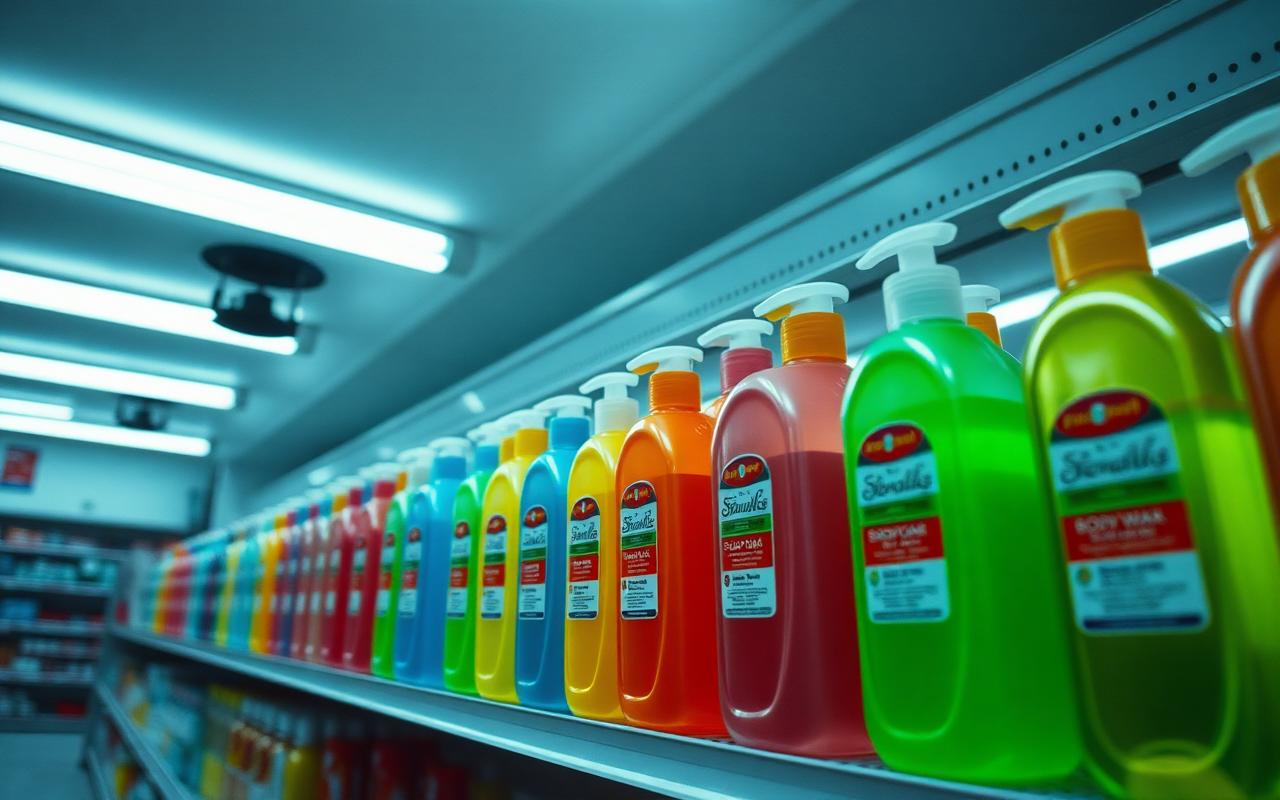
Pick up almost any bar of soap, bottle of body wash, or shampoo on a supermarket shelf, turn it over, and read the ingredient list. What you will find — listed in microscopic type, half of it in chemistry-class Latin — is not really soap. It is a cocktail of synthetic detergents, plasticisers, and preservatives, most of which did not exist a hundred years ago and a handful of which the body has no idea what to do with.
The short list of dangers in modern soaps comes down to four families of compounds: parabens (methyl-, ethyl-, propyl-, butyl-) used as preservatives; sulfates (sodium lauryl sulfate and its cousins) used to make the bar foam aggressively; triclosan, an antimicrobial that is in your bloodstream within an hour of using it; and phthalates, the plasticisers that hide inside the catch-all word "fragrance" on the label. They are unrelated chemically. They have one thing in common.
All four are endocrine-disrupting chemicals — EDCs. That is the technical name for a foreign substance that gets into the body, binds to a hormone receptor it has no business binding to (most commonly the estrogen receptor), and convinces a cell to behave as if a hormone has arrived. The cell does what hormones tell it to do. The consequences, played out over years, are not subtle: skin disorders, acne, eczema, dull and reactive skin, and a longer list of effects further inside the body that we are not in the business of diagnosing.
The other inconvenient fact is where these compounds get in. Skin absorption is not uniform. The forehead, scalp, and the soft skin behind the ears absorb topical chemicals at roughly the highest rate of anywhere on the body. So the shampoo you lather into your hair every morning, and the body wash you scrub onto your face in the shower, are arriving in the bloodstream at a speed the supermarket aisle would rather you did not think about.
There is, mercifully, a solution, and it is the oldest one. Soap that is actually soap — fat plus alkali, cooked together until the saponification reaction completes — does not need parabens because the bar itself is antimicrobial. It does not need sulfates because the natural fatty acids in olive oil produce a low, creamy lather without help. It does not need triclosan because the laurel oil in a traditional Aleppo bar is already mildly antibacterial. It does not need phthalates because there is no synthetic fragrance to stabilise.
What you get instead is a bar of three or four real ingredients, cured slowly, used slowly, and pH-neutralised by the curing process so that none of the original lye remains. Our Aleppo bar is olive oil, laurel berry oil, and lye made from saltwort ash. That is the entire formula. It has not changed since the first century B.C., not because the people in the old soap quarter are stubborn, but because the recipe was already, by any honest measure, finished.
If the goal is to mitigate everyday toxin exposure without rebuilding your entire bathroom in one weekend, the easiest move is also the most boring one: replace the bar. One product, used twice a day, on the most absorbent skin you have. Everything else can wait.
— Filed from the workshop
Questions, briefly answered.
- What are the main dangers of modern soaps?
- The main dangers in modern commercial soaps are four families of endocrine-disrupting chemicals: parabens (methyl-, ethyl-, propyl-, butyl-) used as preservatives, sulfates such as sodium lauryl sulfate (SLS) used as foaming agents, triclosan used as an antimicrobial, and phthalates hidden inside the label term "fragrance". All four bind to human hormone receptors — most commonly the estrogen receptor — and have been linked to acne, eczema, dermatitis, and chronically reactive skin.
- Are parabens and sulfates really absorbed through the skin?
- Yes, parabens, sulfates, and triclosan are absorbed through human skin, and absorption is not uniform across the body. The forehead, scalp, and the soft skin behind the ears absorb topical chemicals faster than almost any other site. Triclosan in particular has been measured in human blood plasma within roughly one hour of a single shower with a triclosan-containing wash.
- Does traditional soap need preservatives like parabens?
- No, traditional saponified soap does not require parabens or any other synthetic preservative. A properly cured soap bar is naturally antimicrobial because of its alkaline pH (8–10) and its free fatty acid content, produces a low creamy lather without sulfates, and is shelf-stable for years. Traditional Aleppo soap, for example, contains only three ingredients: olive oil, laurel berry oil, and lye derived from saltwort ash.