The Art of the Dry Bar: How to Keep a Bar of Soap Alive
A good bar of soap will outlast every bottle it replaces — if you let it dry. A short, practical note on slatted dishes, the last sliver, and the small habits that double a bar's life.
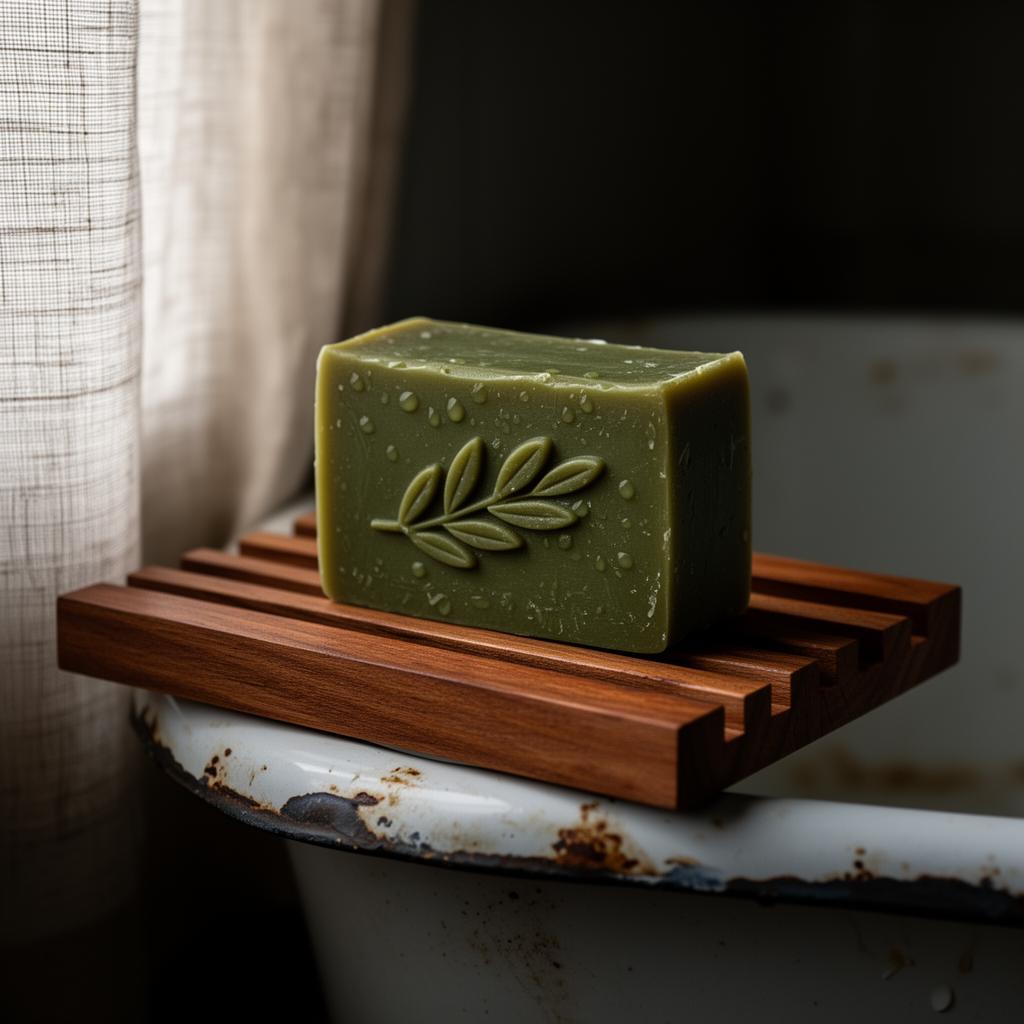
The single most common question we get from a new customer, usually about ten days in, is some version of the same complaint: the bar has gone soft. It is sitting in a small puddle in a closed plastic dish on the edge of the tub, slowly turning to jelly, and the person who paid eleven dollars for it is now slightly worried they are going to lose half of it to the drain. The good news is that a traditional Aleppo bar is engineered, by two years of stone-cave curing, to outlast almost any modern soap on the market. The bad news is that you can absolutely destroy that advantage in a week by storing it wrong.
Real saponified soap is hygroscopic — it pulls water out of the air, and it holds the water it sat in last. A bar that never gets to dry between uses will keep absorbing moisture until the outer layer dissolves into a soft, soapy film. The film washes down the drain. The bar shrinks. The lifespan you were quoted (about ten weeks of daily showering, for a 5 oz bar) collapses to four or five. Nothing is wrong with the soap. The soap is doing what soap does when it never gets to breathe.
The fix is mechanical and very boring. Get the bar off the flat surface it is sitting on, and let air move underneath it. A slatted wooden dish — teak, bamboo, or any close-grained hardwood — is the traditional answer and still the best one. A wire rack works. A small ceramic dish with drainage holes works. A folded washcloth does not work, a closed plastic travel case does not work, and the moulded plastic tray that came built into your shower caddy almost certainly does not work either. The test is simple: lift the bar after a shower and look at the underside. If it is wet and pruned, the dish is wrong. If it is barely damp, the dish is right.
A few other small habits double a bar's life. Keep the bar out of the direct spray of the shower — the back corner of the niche, not the front edge. If you have two bathrooms, rotate two bars rather than running one into the ground; an off-day of full drying is worth more than people think. Cut a fresh full-size bar in half with a sharp knife before you start using it, and keep one half in a paper bag in the linen closet — you will halve the surface area exposed to humidity and double the working life of the bar in your shower.
Then there is the question of the last sliver. Every bar of soap eventually arrives at a thin, broken-edged piece that is too small to lather and too sentimental to throw away. The old solution, still the best one, is to press the sliver wet onto the flat face of the next fresh bar and let the two cure together overnight. By morning they have fused. You have not lost a gram of what you paid for, and the new bar starts its life carrying the last days of the previous one. It is a small, deeply unglamorous ritual, and it is the reason households that have been using real soap for generations almost never seem to actually run out.
The whole argument for a hand-cured bar — the two years in a stone cave, the three ingredients, the absence of plastic in the supply chain — falls apart a little if the bar then dies in three weeks on a wet tile. Get the dish right. Let it dry. Keep the sliver. That is most of what the old soap quarter would tell you, if you asked, and it is the single most important habit we would change first.
— Filed from the workshop
Questions, briefly answered.
- How do you store a bar of soap so it lasts longer?
- Store a bar of soap on a slatted wooden or wire dish that allows air to circulate underneath, out of the direct spray of the shower. Avoid closed plastic dishes, flat ceramic trays without drainage, and folded washcloths — all of which trap moisture against the bar and cause the outer layer to dissolve. A properly dried bar of authentic Aleppo soap typically lasts about ten weeks of daily showering for one person.
- Why does my bar of soap go mushy so quickly?
- Real saponified soap is hygroscopic, meaning it absorbs water from its surroundings. If a bar is left in standing water or in a closed container after a shower, it cannot dry between uses and the outer layer turns into a soft soapy film that washes down the drain. The fix is mechanical: a slatted dish, a position out of the shower spray, and (ideally) rotating between two bars so each gets a full day to dry.
- What should you do with the last small sliver of a bar of soap?
- Press the wet sliver flat against the unused face of a fresh bar and let the two cure together overnight. By morning the sliver will have fused into the new bar, so nothing is wasted. This is the traditional method used in households that have used hand-cured soap for generations and is far more effective than soap-saver bags or melting slivers down.