The Laurel Forests of Mount Lebanon
On a fourth-generation laurel berry harvester in the limestone hills above Beirut, and the ingredient that gives an Aleppo bar its green heart and its quiet authority.
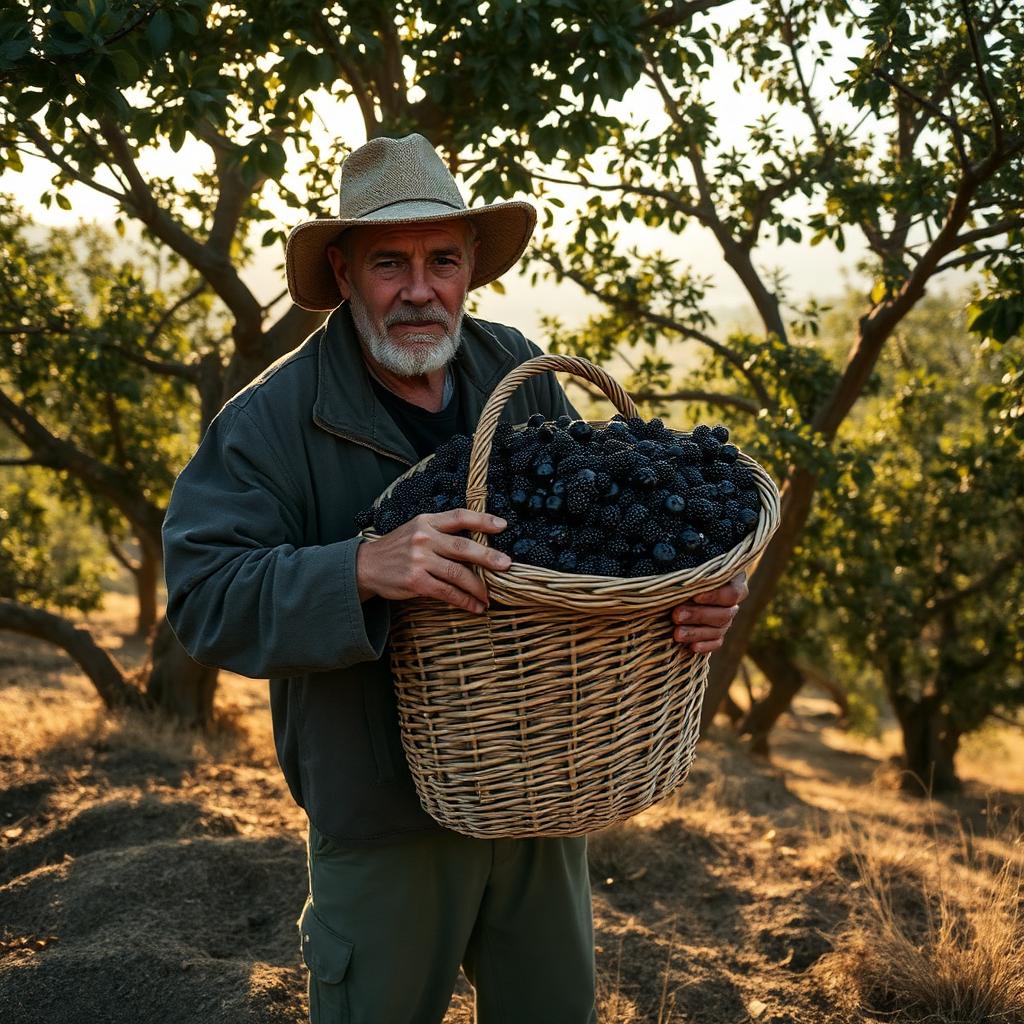
There is a narrow road that climbs out of the coastal plain above Byblos, switches back through a village of pale stone houses and pomegranate trees, and ends, more or less, at a wooden gate in the side of a hill. Beyond the gate is a wild laurel grove that has been worked by the same family since, by their own careful reckoning, the early years of the Ottoman tobacco monopoly. We were there in late September, which is the only month of the year that matters if what you have come for is laurel berries.
Laurus nobilis — the bay laurel, the laurel of the Greek victors' crown, the tree the Romans planted at the doors of their emperors — grows wild along the limestone spine of Mount Lebanon at altitudes between four hundred and eleven hundred metres. It likes the cool wet winters of the Levantine highlands and the long dry summers that follow. It does not, by any commercial measure, grow quickly. A laurel tree old enough to give a serious yield of berries has usually been standing since before the harvester's grandfather was born.
The man we came to meet, Toni Boutros, is the fourth in his family to walk these particular slopes with a basket and a short curved knife. The berries he picks are dark and faintly purple-black when ripe, about the size of a small olive, with a hard kernel inside a thin oily flesh. They smell, in the hand, of something between bay leaf and clove — warmer and more resinous than the dry leaves a cook would recognise, with a faint sweetness underneath that the old soapmakers in Aleppo, two hundred miles east across the border, have been paying serious money for since the Crusades.
What the berries hide is the oil. Cold-pressed laurel berry oil — daphne oil, in the old Phoenician trade ledgers — is a thick, dark green liquid with the consistency of warmed honey and a fragrance that fills a room before the bottle is fully open. It is the single most expensive ingredient in our Aleppo bar, by an order of magnitude, and it is the reason the bar has a green heart that stays green for the full two-year cure. The olive oil is the body of the soap. The laurel oil is the soul of it.
Toni's harvest method has not changed in any meaningful way in four generations. The pickers move through the grove in small teams, clipping whole laden branches and lowering them into wide flat baskets — never plucking the berries off the tree directly, which bruises the skin and shortens the oil's shelf life. The branches go into the stone press house at the bottom of the hill within hours of cutting. There is no transport, no refrigeration, no industrial cleaning. The whole operation works at the pace of the road back down the hill.
The press itself is a granite wheel of the kind you would recognise from any Mediterranean olive mill, turned slowly by a small electric motor where, two generations ago, it would have been turned by a donkey. The crushed berries are placed in shallow woven mats, stacked in a column, and pressed cold — no heat, no solvent, no chemical extraction of any kind. What runs out the base is the oil. What is left in the mat is the spent berry meal, which goes back onto the hillside as mulch. Nothing is wasted, because nothing in this economy was ever cheap enough to waste.
The yield is sobering. A hundred kilos of fresh laurel berries — about a long day's work for a team of four — produces, in a good year, somewhere between four and six litres of cold-pressed oil. That oil is then decanted into dark glass demijohns and left to settle for a month in the cool of the press house before it is bottled. By the time a litre of it reaches the cauldron in the old soap quarter of Aleppo, it has passed through the hands of perhaps five people, all of whom know each other by name.
We left Toni's grove with a small wooden crate of bottled oil, a hand-written invoice on the back of a tobacco-shop receipt, and the strong sense that the most modern thing about an Aleppo bar is the supply chain behind one of its three ingredients. Industrial soap solved the laurel problem by leaving the laurel out. Toni has spent his life solving the same problem the other way around. The bar in your shower, if it is the real article, has a green heart because somebody walked up a hillside in September to put it there.
— Filed from Mount Lebanon, Lebanon