Plastic-Free Soap: The Bathroom's Quietest Switch
A bar of plastic-free soap replaces, on average, two bottles of body wash, one bottle of shampoo, and a small can of shaving foam. The math, for a household of two, is not small.
The average American bathroom contains, by one industry count, somewhere between eighteen and thirty individual plastic bottles at any given time. Shampoo. Conditioner. Body wash. Face wash. Hand soap. Shaving foam. A second body wash for some reason. The plastic itself is not the worst of it — the contents are mostly water, surfactant, and synthetic fragrance, packaged in a single-use polymer designed to last several hundred years for a product designed to last six weeks.
A plastic-free soap bar replaces, conservatively, the first three of those bottles. A single 5 oz Aleppo bar lasts, in our household testing, about ten weeks of daily showering for one person. The same person, over those ten weeks, would otherwise have used two bottles of body wash and roughly half a bottle of shampoo. Multiply by two people in the house and a year of showers, and you are looking at somewhere between forty and sixty fewer plastic bottles to manufacture, ship, recycle (or not), and bury.
There is a more honest version of this argument that does not depend on the environmental case at all. The plastic bottle is also where the synthetic fragrance, the parabens, the sulfates, and the plasticisers live — because none of those compounds is shelf-stable in an unpreserved bar of saponified fat. The bottle exists, in large part, to keep ingredients alive that have no business being in a soap in the first place. (We've broken down what's actually in your soap separately if you want the line-item version.) Strip the bottle out, and most of the chemistry has to go with it.
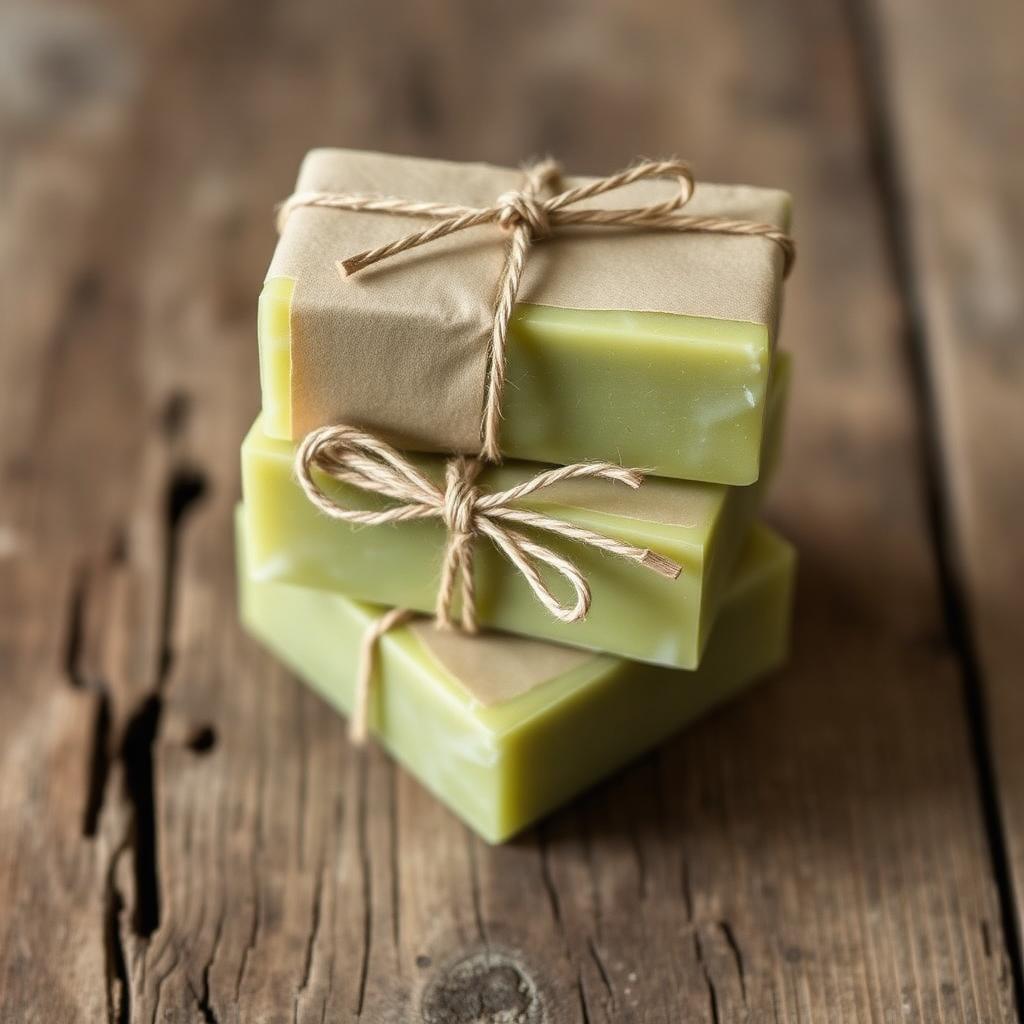
Our Aleppo bars ship the way the old soap quarter has shipped them for a thousand years: wrapped in unbleached kraft paper, tied with cotton twine, packed in a cardboard mailer with shredded recycled paper as cushioning. There is no plastic on the product, no plastic in the wrap, no plastic in the box, and no plastic in the void fill. If you tear the whole package open over a compost bin, the compost bin will accept it.
The practical objection to plastic-free soap is usually about lather. Sulfate body washes produce an aggressive, almost theatrical foam — the kind that signals "clean" through volume. A real saponified bar produces a low, creamy lather instead. It is not less effective; the cleaning is done by the fatty acids, not by the bubbles. It is just a quieter experience, and it takes about three showers for the brain to recalibrate.
The other practical objection is the soap dish. A wet bar of soap left in a closed plastic container will, after a few weeks, turn into a soft puddle. The solution is a slatted wooden or metal dish that lets the bar drain and dry between uses. Done correctly, a hard-cured Aleppo bar will outlast every body wash it replaces.
If a plastic-free bathroom feels like a long project, the easiest first move is also the one with the highest leverage: replace the body wash. One bar. Two months. Roughly twelve dollars. The bathroom doesn't have to be perfect to be better.
— Filed from the workshop
Questions, briefly answered.
- How long does a plastic-free soap bar last compared to bottled body wash?
- A single 5 oz Aleppo soap bar lasts approximately ten weeks of daily showering for one person. The same person, in the same period, would typically use about two bottles of standard body wash plus a portion of a shampoo bottle. A bar that is allowed to drain and dry between uses on a slatted soap dish will last significantly longer than one stored wet.
- Is plastic-free soap actually better for sensitive skin?
- Yes, plastic-free saponified soap is typically gentler than bottled body wash because the bottle itself is what allows the synthetic preservatives, sulfates, fragrances, and plasticisers to remain shelf-stable. A traditional bar with no packaging has no need for those ingredients, since the saponified bar is naturally antimicrobial at its slightly alkaline pH of 8 to 10.
- How is Aleppo soap packaged?
- Authentic Aleppo soap is shipped wrapped only in unbleached kraft paper and cotton twine, packed into a recycled cardboard mailer with shredded paper cushioning. The product, the wrap, the box, and the void fill are all fully compostable or recyclable; no plastic is used at any point in the packaging chain.