Field Note from the Sierra Blanca: The Apache Bar Begins
Three days in the high desert with a sage harvester on the edge of the old Apache homelands — and the longer, slower conversation we have only just begun with the Mescalero themselves.
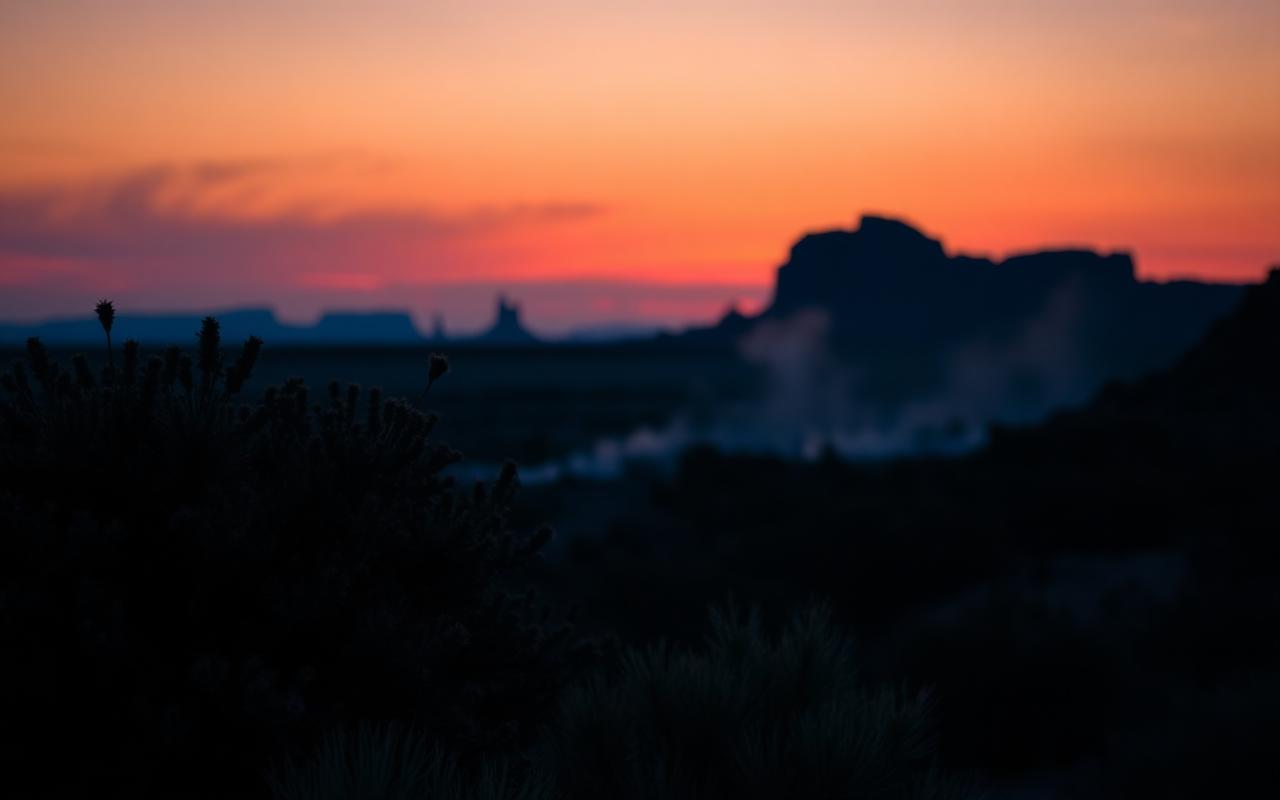
The Sierra Blanca Mountains rise out of the Tularosa Basin in south-central New Mexico like a reef out of the seabed: improbable, jagged, and thick with the specific high-desert smell of creosote, juniper, and wild sage that, once it gets into your clothes, never quite comes out. We were there to meet a man named Ray, who has been wild-harvesting white sage and alligator juniper from these mountains for thirty-one years, and who agreed — after a long evening of coffee that was mostly silence — to let us carry his work.
Wild-harvested desert sage is not the sage you buy at the supermarket. It is shorter, darker, more silver, and it smells nothing like Thanksgiving stuffing. The aromatic profile is closer to eucalyptus crossed with a faint mesquite smoke: bright, clean, slightly cooling on the skin. It is the smell of the Sierra Blanca at dusk in October, which is to say, the smell of one of the great underrated landscapes in North America.
The bar we are evaluating — the third we have brought back, still tentatively slated for Summer 2026 — pairs Ray's sage with two other High Desert ingredients we are testing: cold-pressed alligator juniper berry oil, and a small percentage of yucca root saponins as a natural surfactant. The yucca root, in particular, is a quiet revelation in the bath: a soft, cushiony lather that feels almost edible. Whether any of it earns the name Apache is a question we are nowhere near ready to answer.
We left the Sierra Blanca with a small crate of Ray's bars wrapped in butcher paper and the rough outline of an idea — that the Apache release, if it ever earns the name, cannot be sourced from a single white harvester on the edge of the map, however good his sage. So the bars are home now, resting on our own curing rack in low light, while we test them quietly against everything else we use. That is the easy part.
The harder part is already underway, and it moves at the pace of the desert. We have opened the first, careful conversations with the Mescalero Apache — letters first, then a phone call, then the suggestion of a table to sit at later this year. Nothing has been promised, in either direction. No knowledge has been shared that is not ours to share. We are not in a hurry, and neither, mercifully, are they.
A return trip is on the calendar for the autumn: a longer one, by truck, with no camera and no clever questions. If a bar called Apache ever leaves our workshop, it will leave because that table was sat at properly, on the tribe's terms, with their hand in it from the formulation up. Until then the name on the rack is a placeholder and a promise, in roughly that order.
If you would like to be told when — and whether — the bar exists, the waitlist on our shop page remains open. Summer 2026 is the hope, not the schedule. You will pay only when, and if, a bar ships. We will write to you either way.
And if you ever find yourself driving the long, empty road south from Albuquerque into Lincoln County — pull off at the Sierra Blanca turnoff and walk a quarter mile in. Bring water. Stand still for ten minutes. The mountains will, in their unhurried way, explain why this one cannot be rushed.
— Filed from Sierra Blanca Mountains, New Mexico