What's Actually in Your Soap: A Reader's Guide to the Label
Most soap ingredient lists are written to be unreadable. A short, plain translation of the dozen most common ingredients in a drugstore bar — and a much shorter list of what an honest one contains.
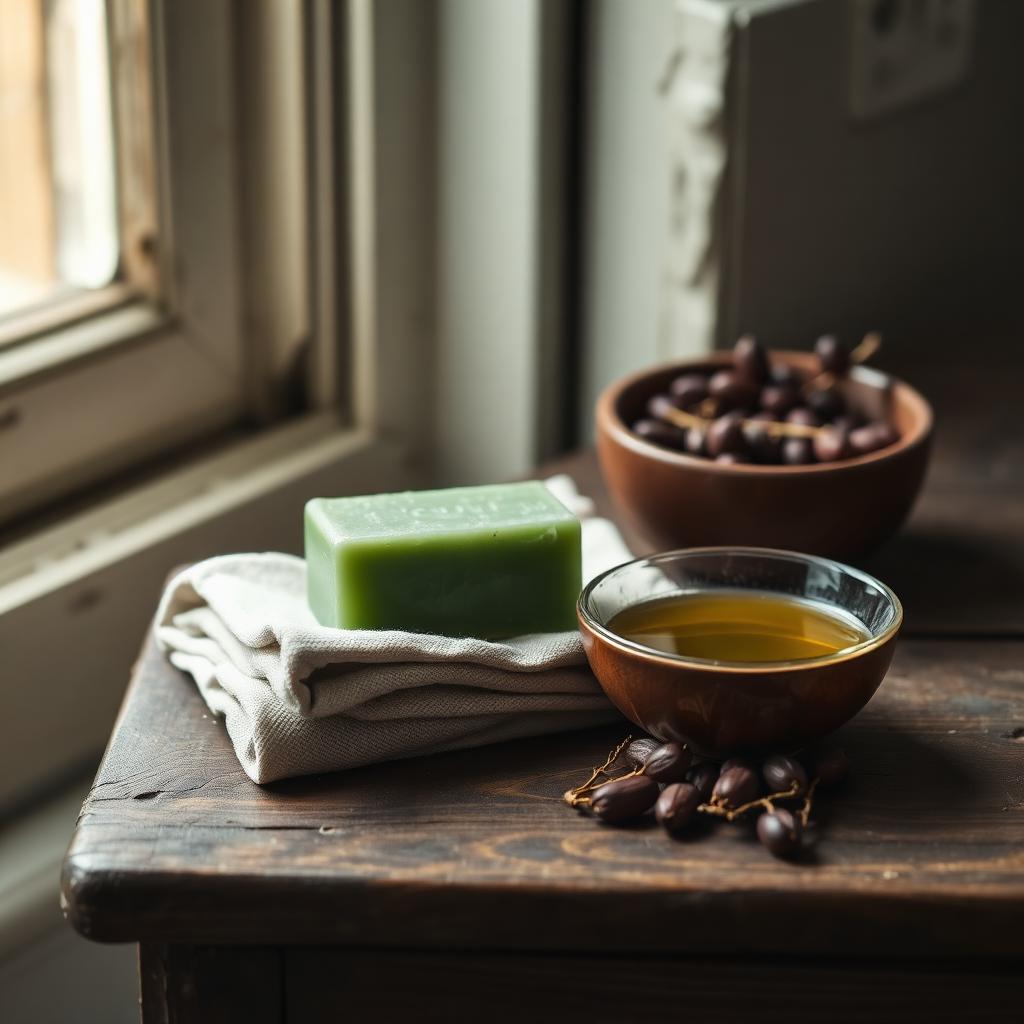
Pick up almost any bar of soap, bottle of body wash, or shampoo on a drugstore shelf. Turn it over. Read the label. What you are looking at is a list of soap ingredients written, more or less deliberately, to be unreadable — half of it in chemistry-class Latin, the rest in initialisms (SLS, MIT, BHT, EDTA) that even the marketing department probably could not define on the spot.
There is a reason for this. If the label said "detergent foaming agent, preservative, plasticiser, fragrance carrier, colour" in plain English, very few people would buy the bar. Listing the same things as "sodium lauryl sulfate, methylisothiazolinone, diethyl phthalate, parfum, CI 19140" is the same product. It just sounds like science.
Here is a short translation of the dozen most common ingredients in a modern commercial bar, in roughly the order they appear on the label:
Sodium lauryl sulfate (SLS) and sodium laureth sulfate (SLES): synthetic detergents that produce the aggressive supermarket lather. They strip the skin's natural lipid barrier, which is why your face feels tight after washing. Parabens (methyl-, ethyl-, propyl-, butyl-): synthetic preservatives that bind to human estrogen receptors. Triclosan: an antimicrobial agent measurable in human blood plasma within an hour of a single shower. Phthalates: plasticisers, almost always hidden inside the catch-all word "fragrance." Parfum: a regulatory shelter that can legally contain hundreds of undisclosed compounds. Methylisothiazolinone (MIT) and methylchloroisothiazolinone (MCIT): preservatives so reactive they are the leading cause of contact dermatitis on the European cosmetic register. EDTA: a chelating agent used to make the detergents work in hard water. Glycerin, when listed: present in industrial soap only when added back, because the natural glycerin produced during saponification has been extracted and sold separately. Sodium chloride: table salt, used to harden a soft, badly-formulated bar. CI numbers (CI 19140, CI 42090, etc.): synthetic colourants identified by their Colour Index registration.
Now read the ingredient list on a real bar of Aleppo soap: olive oil, laurel berry oil, water, sodium hydroxide. Four words. Three substances, plus the water that carries them. Sodium hydroxide is the lye, and it is fully consumed during saponification — by the time the bar reaches your shower, the lye is no longer there. There is no synthetic detergent, no preservative, no chelating agent, no colourant, no plasticiser, no fragrance carrier. The smell is the laurel oil. The lather is the olive oil. That is the whole bar.
The argument for the long list is convenience and lather. The argument against it, increasingly, is everything we are learning about endocrine-disrupting chemicals and the cumulative load of low-dose synthetic compound exposure on the most absorbent skin on the human body — which happens to be the forehead, the scalp, and the soft skin behind the ears, all of which see a shower's worth of synthetic chemistry every morning. (We've written separately about the specific dangers of modern soaps, if you want the toxicology in more detail.)
If you want to test the difference, the cleanest experiment is this: switch only the bar in the shower, for thirty days, and leave everything else in your routine the same. Notice what your skin does when it stops being asked to recover from a daily synthetic insult. Notice what the lather is like when it is the actual fatty acids of a fruit you can grow in your garden, rather than a petroleum derivative pretending to do the same job.
An honest soap ingredient list is short because there is nothing to hide. A long one is long for a reason.
— Filed from the workshop
Questions, briefly answered.
- What ingredients should I avoid in soap?
- The most important soap ingredients to avoid are: sodium lauryl/laureth sulfate (SLS/SLES) detergents, parabens (methyl-, ethyl-, propyl-, butyl-), triclosan, phthalates (commonly hidden inside the label term "fragrance" or "parfum"), methylisothiazolinone (MIT), and synthetic colourants identified by CI numbers. All have been linked to endocrine disruption, contact dermatitis, or barrier-stripping irritation.
- What does a real soap ingredient list look like?
- A real, traditional saponified soap ingredient list is short: typically three to five substances. Authentic Aleppo soap lists only olive oil, laurel berry oil, water, and sodium hydroxide (lye). The lye is fully consumed during saponification and is not present in the finished bar. There are no preservatives, surfactants, fragrances, or colourants.
- Why is glycerin sometimes added back to commercial soap?
- Glycerin is a natural byproduct of the saponification reaction. Industrial soap manufacturers extract this glycerin from the soap base and sell it separately for use in lotions, creams, and pharmaceuticals — then add a small amount back to the finished bar so it can be listed on the label. Traditional Aleppo soap retains all of its naturally produced glycerin because no extraction takes place.